



Chicago Motorcycle Accident Lawyer
At Briskman Briskman & Greenberg, our Chicago motorcycle accidents attorneys have seen first-hand the toll that these serious injuries can take on you and your loved ones. We have spent decades representing people in Chicago who have been injured or who have lost loved ones in fatal motorcycle accidents because of the carelessness of others.
Our motorcycle accident attorneys have been trusted in Chicago for decades. Before you call another law firm, see our guide on how to know if you're hiring the best motorcycle accident lawyer in Chicago.
Our Top-Rated Motorcycle Accident Lawyers Get Results
$717K
Liquidación por daños personales
$875K
Lesiones por accidente de tráfico con peatón implicado
$2,01Millones
Responsabilidad civil
$1,9 Millones
Lesiones por accidente
$900K
Accidente de tráfico grave
En esta página
Briskman Briskman & Greenberg has been serving motorcycle accident victims throughout Chicago for decades. Our top-rated attorneys have a proven track record of securing significant recoveries for injured motorcyclists. We know how to build strong cases, holding negligent drivers responsible, and fighting insurance companies that don't want to give you the compensation you need to record after an injury.
- Decades of Experience: Our attorneys have extensive experience handling motorcycle accident cases in Chicago and Illinois and have recovered millions for our clients.
- Personalized Attention: We treat every client with respect and compassion, keeping you informed and supported every step of the way.
- No Fee Unless We Win: You pay nothing unless we recover compensation for you. That's the Briskman Guarantee.
- Local Knowledge: We understand the city’s roads, traffic patterns, and local courts, putting our insight to work for you.
Chicago & Nationwide News Outlets Turn to Briskman Briskaman & Greenberg When They Need Insights from a Trusted Motorcycle Accident Lawyer








Briskman Briskman & Greenberg Personal Injury & Car Accident Lawyers has recovered millions of dollars for people injured in car, truck, and motorcycle accidents and we are here for you, too.
Risk Free. No Fee Unless We Win.
En esta página
Common Causes of Motorcycle Accidents in Chicago
Motorcycle accidents are unfortunately all too common on Chicago’s busy streets. According to the Illinois Department of Transportation (IDOT), motorcyclists represent a disproportionate percentage de traffic fatalities y serious injuries in Illinois, even though motorcycles account for just a small fraction of vehicles on the road. Understanding the most frequent causes of motorcycle accidents in Chicago can help both riders and drivers prevent tragic collisions—and can be crucial for anyone seeking compensation after a crash.
Below, we explore the leading causes of motorcycle accidents in Chicago, drawing from research, crash data, and guidance from the Illinois DMV and other authorities.
1. Distracted Driving
Conducción distraída is one of the primary causes of all motor vehicle accidents, and motorcycle crashes are no exception. Drivers using cell phones, adjusting navigation devices, eating, or simply not paying attention are less likely to see motorcycles, which are smaller and can easily disappear in blind spots. The Illinois DMV specifically warns drivers to “scan carefully and expect to see motorcycles,” noting that distraction can be deadly for riders.
Download the Illinois Motorcycle Operator's Guide
Key contributing distractions include:
- Texting or talking on the phone
- Adjusting radio or navigation systems
- Eating or drinking
- Conversing with passengers

2. Left-Turn Collisions
A left-turn collision occurs when a vehicle turns left in front of an oncoming motorcycle. IDOT data indicates these are among the most dangerous types of accidents for riders and account for a significant portion of serious injuries and fatalities. Often, the turning driver misjudges the speed or distance of the motorcycle, fails to yield the right of way, or simply does not see the bike due to its smaller size.
Prevention tips:
- Motorcyclists should approach intersections cautiously and remain visible.
- Drivers must always double-check for motorcycles before turning left.
3. Unsafe Lane Changes
Unsafe lane changes are a frequent cause of motorcycle accidents, particularly on Chicago’s multi-lane streets and expressways. Drivers of cars and trucks often fail to check their blind spots or use turn signals before changing lanes. Because motorcycles are smaller than cars, they are more easily overlooked, leading to dangerous sideswipe or “cut-off” accidents.
Key factors:
- Failure to signal
- Not checking mirrors or blind spots
- Sudden lane changes in heavy traffic
4. Speeding and Aggressive Driving
Exceso de velocidad reduces a driver’s ability to react to sudden changes in traffic and increases the severity of any collision. In urban areas like Chicago, both speeding drivers and motorcyclists face heightened risks. Aggressive maneuvers—such as weaving, tailgating, or abrupt stops—can leave little time for a motorcyclist to respond and avoid a crash.
Just like car accidents, high-speed can result in serious motorcycle injuries.
Consequences of speeding include:
- Reduced stopping distance
- Greater impact force in a collision
- Less time to perceive and react to hazards
5. Impaired Driving (DUI)
Driving under the influence of alcohol or drugs continues to be a leading contributor to severe motorcycle accidents. Impaired drivers may have delayed reaction times, impaired judgment, and difficulty maintaining their lane—all of which are particularly dangerous for vulnerable road users like motorcyclists. The Illinois DMV and law enforcement agencies strongly warn against riding or driving while impaired.
Important facts:
- Even small amounts of alcohol or drugs can impair coordination.
- Motorcyclists themselves are also at risk, never ride impaired.
6. Poor Road Conditions and Hazards
Chicago’s roads are notorious for potholes, uneven pavement, loose gravel, manhole covers, and construction zones—all of which pose a much greater risk to motorcycles than to cars or trucks. Sudden encounters with debris or slippery surfaces can cause a rider to lose control, leading to single-vehicle accidents or falls.
Common hazards in Chicago include:
- Potholes and cracks from freeze-thaw cycles
- Metal utility covers, especially when wet
- Debris and loose gravel from construction zones
- Oil spills or standing water
Riders should always remain vigilant and slow down in poorly maintained areas.
7. Dooring and Parked Cars
In urban settings like Chicago, “dooring” is a unique hazard—where a parked car occupant suddenly opens a door into the path of an oncoming motorcycle. Because of their narrower profile, motorcycles are at particular risk if a rider is traveling close to parked vehicles.
How to prevent dooring:
- Motorcyclists should leave extra space when passing parked cars.
- Drivers and passengers should use the “Dutch Reach” method: open doors with the far hand to prompt a shoulder check for approaching traffic.
8. Failure to Yield
Failure to yield the right of way is a common error by drivers at intersections, stop signs, or when merging. Motorcycles are often overlooked in these situations, leading to sideswipe or T-bone accidents.
At-risk scenarios include:
- Entering traffic from driveways or side streets
- Merging onto highways or changing lanes
- Navigating roundabouts or uncontrolled intersections
9. Weather Conditions
Chicago’s rapidly changing weather can create hazardous riding conditions. Rain, snow, ice, and wind all reduce traction and visibility, increasing the likelihood of losing control or being struck by another vehicle. Riders should check forecasts before heading out and adjust their riding style or delay travel during dangerous weather.
Tips for riding in poor weather:
- Slow down and increase following distance
- Use proper gear for visibility and warmth
- Avoid sudden maneuvers
10. Inexperience and Lack of Training
Finally, a lack of experience or proper training is a significant cause of motorcycle accidents. The Illinois DMV stresses the importance of completing an approved motorcycle safety course, as untrained riders may not have the skills needed to respond to hazards, maintain safe speeds, or handle emergency situations.
By understanding the most common causes of motorcycle accidents in Chicago like distracted driving, left-turn collisions, unsafe lane changes, speeding, impaired driving, poor road conditions, dooring, failure to yield, bad weather, and rider inexperience, both riders and motorists can take steps to make the streets safer for everyone.
If you or someone you love has been involved in a motorcycle accident in Chicago, contact an experienced attorney today. We can help you understand your rights and options for pursuing compensation.

En esta página
What to Do After a Motorcycle Accident
A motorcycle accident can leave you feeling shocked, overwhelmed, and unsure of what happens next. You may be dealing with serious injuries, a damaged bike, and mounting questions about how you will recover—physically, financially, and emotionally. At Briskman Briskman & Greenberg, we know how difficult this time can be. Taking the right steps after an accident is crucial; it protects your health, your legal rights, and your ability to recover compensation for your losses.
Below, we outline the most important actions to take after a motorcycle accident in Chicago or anywhere in Illinois.
Your Safety Comes First
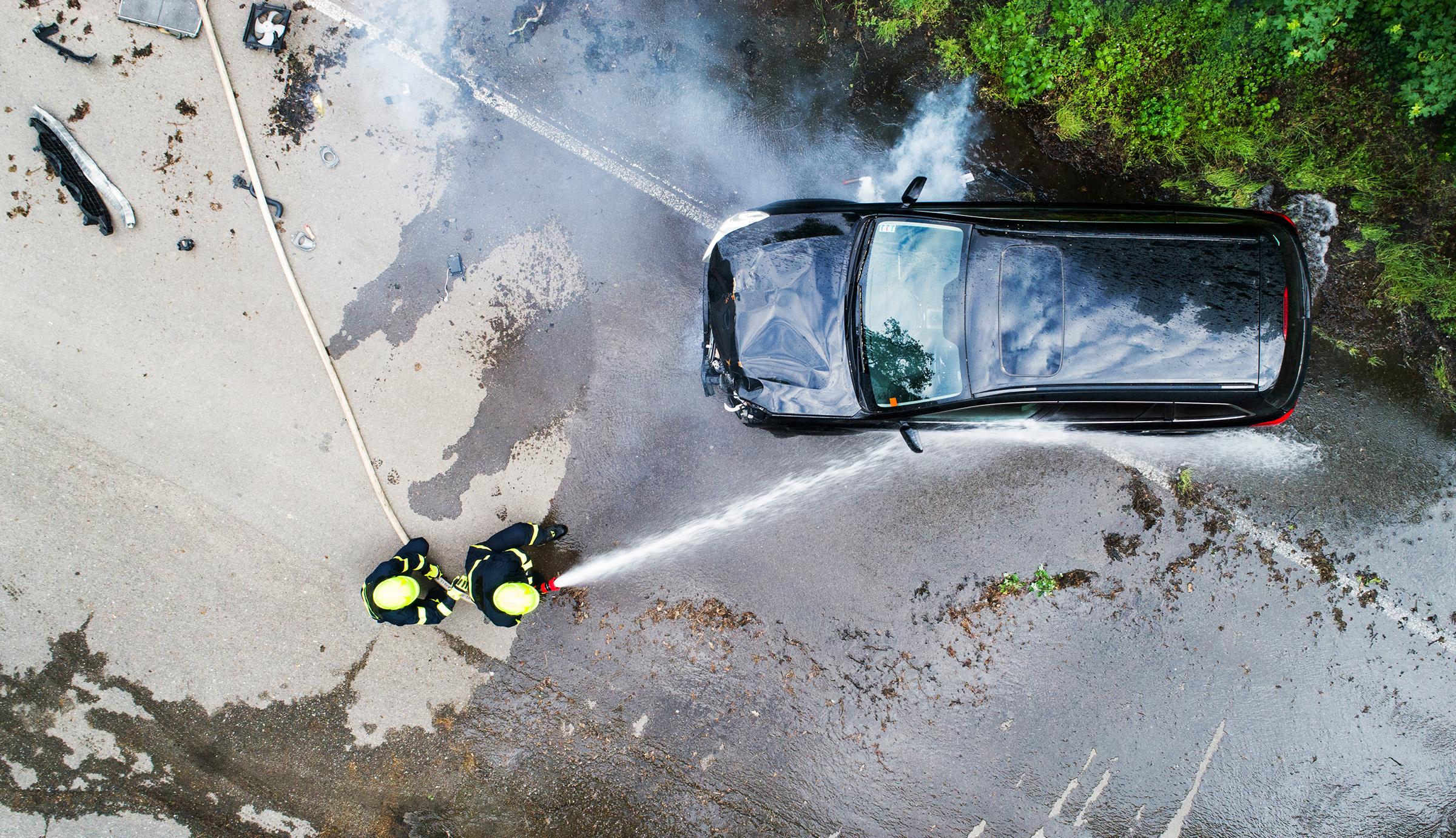
Immediately after a crash, your priority should be your safety and the safety of others involved. If you are able, move yourself out of harm’s way—away from traffic and to a safe location at the side of the road. If you cannot move, try to signal for help and wait for emergency responders.
Turn on hazard lights if possible, and ask others nearby to help warn oncoming vehicles. Your well-being is what matters most.
Check for Injuries
Take a moment to assess your condition. Adrenaline can mask serious injuries, so look for any bleeding, pain, or restricted movement. If you have passengers or others were involved in the accident, check on them too. Avoid moving anyone who appears seriously injured unless there is an immediate danger, such as a fire.
Call 911 and Report the Accident
Even if you believe your injuries are minor or the crash seems straightforward, call 911 right away. Emergency responders can assess injuries and provide medical care at the scene. The police will create an official accident report—a critical document that can support your insurance claim and any future legal action.
Remain at the scene until help arrives, unless you need immediate medical attention.
Document the Scene of Your Motorcycle Crash
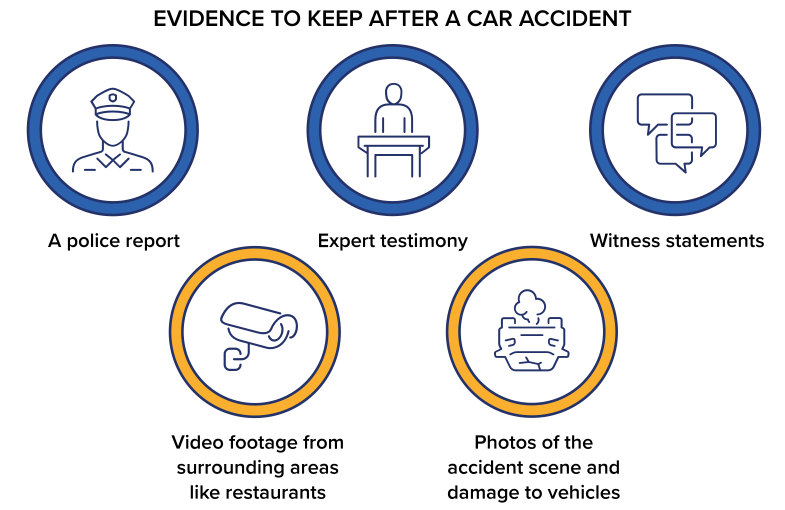
If you are physically able, gather as much information as you can. Use your phone to take photos and videos of:
- All vehicles involved, including your motorcycle, from multiple angles
- Damage to your bike and any other vehicles
- The accident scene, including skid marks, debris, road signs, and traffic signals
- Your injuries
Record the date, time, weather, and road conditions. This evidence can be invaluable later on.
Exchange Information
Ask the other driver(s) for their name, address, phone number, and insurance information. Write down their license plate number and the make and model of their vehicle. If there are witnesses, politely ask for their contact details—independent witness statements can make a difference when determining fault.
Cooperate with Law Enforcement
When the police arrive, explain what happened factually and clearly, but avoid speculating about who was at fault. Ask the responding officer for their name and badge number, and request the police report number. This report will be important for your insurance and any future legal claim.
Seek Medical Attention Promptly
Not all injuries are immediately obvious. Even if you feel fine, it is always wise to let paramedics check you at the scene and to follow up with your doctor or at an urgent care clinic as soon as possible. Some symptoms may not appear for hours or even days.
Make sure to keep copies of any medical records, diagnoses, and treatment plans. Document how you are feeling in the days and weeks after the accident, including any new symptoms or pain.
Protect Your Rights
After a serious motorcycle accident, insurance companies will often move quickly to minimize their payout. Until the full facts of the crash have been investigated, you may not know the actual cause of the accident. Therefore, do not admit fault to anyone not the other driver, not their insurance company, and not on social media. Avoid giving recorded statements or signing any settlement offers before speaking with an attorney.
Keep your motorcycle, helmet, and riding gear in their post-accident condition until they have been inspected. Save all receipts and records related to repairs, rentals, and medical expenses.
Get a Free Consultation With a Motorcycle Accident Attorney
At Briskman Briskman & Greenberg, we understand what you are going through. Our team has extensive experience dealing with insurance companies and helping injured riders in Chicago and throughout Illinois secure the compensation they deserve. We can answer your questions, conduct a thorough investigation, and manage all communications with insurers, so you can focus on healing.
There is no fee unless we win your case.
Continue Your Recovery
Follow your doctor’s advice and attend all follow-up appointments. Keep a detailed log of your injuries, treatments, and how your injuries affect your daily life and ability to work. This documentation will be important for your case.
Track any missed workdays and any additional expenses related to your accident, such as transportation to doctors’ visits or home care needs.
Watch for Delayed Symptoms
Injuries like concussions or soft-tissue damage may not be evident right away. If you notice new pain, headaches, dizziness, or other symptoms in the days following your accident, seek medical attention without delay.
Stay Off Social Media
It’s natural to want to share your experience, but anything you post about the accident or your injuries might be used against you by insurance companies. Until your case is resolved, it’s best to avoid posting details about your accident or recovery.
We Are Here to Help
A motorcycle accident can change your life in an instant, but you don’t have to face the aftermath alone. At Briskman & Briskman, our attorneys are ready to listen to your story, answer your questions, and fight for your rights every step of the way. Contact us today for a free consultation.
If you need additional customization, further tailoring to your branding, or a call to action, just let me know!
Immediately After a Motorcycle Accident
If you are involved in a motorcycle accident, there are several crucial things you should do:



En esta página
How Our Motorcycle Accident Attorneys Can Help
When you’re facing the aftermath of a serious motorcycle accident or injury, having the right legal team by your side makes all the difference. At Briskman Briskman & Greenberg, our top-rated attorneys bring decades of experience and a proven track record of success to every case we handle. We take the time to listen to your story, understand your goals, and develop a personalized legal strategy tailored to your unique situation.
Our firm is committed to standing up for injury victims and their families throughout Chicago and Illinois. We know how overwhelming it can be to deal with medical bills, lost wages, and insurance companies after an accident. That’s why our attorneys handle every aspect of your claim, from thorough investigations and gathering evidence to negotiating with insurers and, when necessary, representing you in court. With Briskman Briskman & Greenberg, you get more than just legal expertise—you get compassionate advocates who fight tirelessly for the compensation and justice you deserve.
There are no upfront fees when you work with our firm; you only pay if we win your case. Our reputation for integrity, attention to detail, and outstanding results has earned us the trust of clients across Illinois.
Our injury lawyers can handle any motor vehicle accident case.
Chicago Abogados de accidentes de bicicleta
Chicago Abogados de accidentes de navegación
Chicago Abogados de lesiones cerebrales
Chicago Accidentes de tráfico en el trabajo Abogados
Chicago CTA Abogado de accidentes de autobús y tren
Chicago Abogados de accidentes por conducción distraída
Chicago Abogados de accidentes por conducir ebrio
Chicago Abogados de accidentes de conductores de edad avanzada
Chicago Abogados de accidentes de coche mortales
Chicago Lyft Abogado de Accidente de Coche
Chicago Abogados de Accidentes de Motocicleta
Chicago Abogado Accidente Autobús Pace
Chicago Abogados de accidentes de coches de alquiler
Chicago Abogado de accidentes de tráfico
Our Top Rated Motorcycle Accident Lawyers

Desde el momento en que me puse en contacto con este bufete me trataron como de la familia. Recomiendo encarecidamente a estos abogados.
- RG



En esta página
Motorcycle Accidents and Insurance in Illinois
Motorcycle accidents in Illinois often present unique challenges for riders when dealing with insurance companies. Unlike car accidents, motorcycle crashes frequently result in more severe injuries and greater damage due to the lack of protection motorcycles provide. Illinois law requires motorcyclists to carry liability insurance, but many riders discover after an accident that the minimum coverage may not be enough to handle extensive medical bills, lost wages, and property damage. Understanding the details of your policy and the state’s insurance requirements is crucial for protecting yourself before and after an accident.
Dealing with insurance claims after a motorcycle accident can be complicated, especially when fault is disputed or when the other driver is uninsured or underinsured. Insurance companies are known for minimizing payouts, sometimes blaming motorcyclists for their own injuries—even when the evidence shows otherwise. It’s important to collect as much documentation as possible, including the police report, medical records, witness statements, and photographs of the accident scene and injuries, to support your claim and protect your rights.
If you’ve been involved in a motorcycle accident in Illinois, consulting with an experienced attorney can make a significant difference. A lawyer who understands both state law and the tactics insurance companies use can help you navigate the claims process, advocate for fair compensation, and, if necessary, pursue legal action against negligent parties. Briskman Briskman & Greenberg has a proven track record of standing up for injured motorcyclists and making sure their voices are heard—so you can focus on your recovery and getting your life back on track.
Negociar con la compañía de seguros
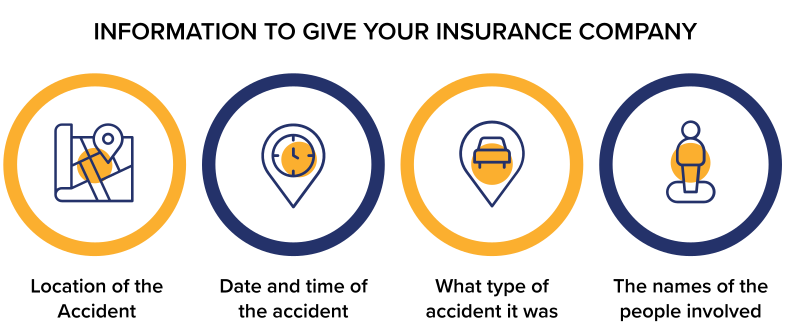
Dealing with insurance companies after a motorcycle accident can be an extremely complicated process that involves skillful negotiation. At Briskman Briskman & Greenberg, we know exactly how to handle insurers. We make sure that you can focus on getting better while our knowledgeable car accident lawyers conduct investigations and gather valuable evidence to help you obtain the compensation you deserve.
Recursos adicionales
No comparta más información de la necesaria
Sharing extra information about your motorcycle crash with your insurance company can weaken your case for compensation. To avoid making any mistakes and ensure your case is in safe hands, consulte a un abogado antes de hablar con cualquier compañía de seguros.
Recuerde, las compañías de seguros son empresas con ánimo de lucro
If you have been involved in a motorcycle accident, it is important to remember that the insurance company is not on your side. Most insurers are seeking to pay injured victims as little as possible. Even your own insurance company may try to downplay the severity of your accident and injuries in an attempt to pay a smaller settlement amount.
Sea educado y cuidadoso al hablar con la compañía de seguros de la otra parte.
Si la compañía de seguros de la otra parte se pone en contacto con usted, sea cortés pero no facilite una declaración grabada. Dile a la aseguradora que debe hablar con tu compañía de seguros o con tu abogado para conocer los detalles.
En esta página
Laws in Illinois that relate to motorcycle accidents
If you're injured in a motorcycle accident in Illinois, it's important to understand the laws that may impact your ability to recover compensation. Illinois follows a fault-based insurance system, meaning the person responsible for causing the crash is legally liable for damages. Riders have the right to file a claim with the at-fault driver’s insurance, pursue their own insurance if applicable, or sue in civil court. However, strict deadlines apply—typically two years for personal injury and five years for property damage. Compensation may be reduced if the motorcyclist is found partially at fault, as Illinois uses a modified comparative fault rule. Other legal considerations include mandatory police reporting for crashes with injuries or significant damage, required liability and uninsured motorist insurance coverage, and the option to carry MedPay for immediate medical expenses. Victims may also hold intoxicated drivers—and in some cases, the establishments that served them—financially accountable under DUI and dram shop laws. Traffic law violations like failure to yield or running red lights can establish negligence, and crash reports often play a critical role in supporting claims.
1. Fault-Based Insurance System
Illinois follows a traditional fault-based system for motorcycle accidents, meaning the individual who caused the crash is legally responsible for covering the resulting damages. If you are injured in a motorcycle accident, you have the right to seek compensation by filing a claim with the at-fault driver’s insurance company, submitting a claim through your own insurer in certain circumstances, or pursuing a personal injury lawsuit in civil court. This system allows victims of motorcycle accidents to recover damages such as medical expenses, lost wages, property damage, and pain and suffering directly from the party responsible for the collision.
-
En at-fault driver (or their insurer) is financially responsible for damages.
-
Injured parties can file a claim with the at-fault driver's insurer, their own insurer (if they have applicable coverage), or presentar una demanda por daños personales.
Relevant Statute: 625 ILCS 5/7-203 (proof of financial responsibility)
2. Prescripción
In Illinois, motorcycle accident victims must act within specific legal timeframes to seek compensation. The statute of limitations for personal injury claims is two years from the date of the crash. If the claim involves property damage—such as repairs to the motorcycle—it must be filed within five years. Missing these deadlines usually results in the court dismissing the case, which makes it essential for injured riders to take prompt legal action.
-
Daños corporales: You have 2 years from the date of the accident to file a lawsuit.
-
Daños materiales: You have 5 years to sue for vehicle or property damage.
Relevant Statute: 735 ILCS 5/13-202 (injury); 735 ILCS 5/13-205 (property)
3. Comparative Fault Rule
Illinois applies a modified comparative fault rule in motorcycle accident cases. This means a rider who is partially responsible for the crash can still recover damages, provided they are less than 50% at fault. However, any compensation awarded will be reduced by their percentage of fault. For instance, if a motorcyclist is found to be 20% at fault, they would receive 80% of the total damages awarded.
-
If the injured party is less than 50% at fault, they can recover damages.
-
Recovery is reduced by the percentage of fault.
Example: If you’re 20% at fault, your damages are reduced by 20%.
Relevant Statute: 735 ILCS 5/2-1116
4. Mandatory Police Reporting
Under Illinois law, motorcyclists must report any accident that results in injury, death, or property damage over $1,500—or over $500 if any involved party is uninsured—to law enforcement. Failing to report such an accident can lead to fines and possible license suspension. In addition to being a legal requirement, a police report can serve as vital evidence in both insurance claims and personal injury lawsuits, making prompt reporting especially important after a motorcycle crash.
-
You must report an accident to police if:
-
Hay injury, death, or over $1,500 in property damage (or $500 if uninsured).
-
-
Failure to report may result in license suspension.
Relevant Statute: 625 ILCS 5/11-406
5. Minimum Insurance Requirements
Under Illinois law, motorcyclists are required to carry the same minimum liability and uninsured/underinsured motorist coverage as auto drivers, but the policy must also clearly cover motorcycle use. The state mandates the following:
-
-
$25,000 bodily injury liability per person
-
$50,000 bodily injury liability per accident
-
$20,000 property damage liability per accident
All riders must also carry uninsured/underinsured motorist bodily injury (UMBI) at the same $25,000/$50,000 limits, providing protection if injured by an uninsured or underinsured at-fault driver
-
These minimums apply specifically to motorcycles, with insurers required to include guest passenger liability in the bodily injury coverage . Coverage for medical payments, comprehensive, or collision is optional, though lenders typically require them when the bike is financed
Relevant Statute: 625 ILCS 5/7-601
6. DUI Laws and Civil Liability
Driving under the influence (DUI) is a serious offense in Illinois that carries both criminal penalties and civil consequences. If a driver causes a motorcycle accident while impaired by alcohol or drugs, they can be held liable for the victim’s damages in a personal injury lawsuit. A DUI conviction can serve as strong evidence of negligence, and in severe cases, punitive damages may also be awarded to the injured party.
-
DUI drivers face both criminal penalties and civil liability.
-
A DUI conviction can be powerful evidence of negligence in a civil case.
-
Daños punitivos may be awarded in extreme cases.
Relevant Statute: 625 ILCS 5/11-501
7. Dram Shop Liability
Illinois law allows injured motorcyclists to seek compensation from bars, restaurants, or other establishments that serve alcohol to visibly intoxicated individuals who later cause a crash. This is known as “dram shop” liability. Even if the motorcyclist had no involvement with the intoxicated person or the alcohol consumption, they may still pursue a claim against the establishment if the impaired driver caused the motorcycle accident. Dram shop laws provide an additional avenue for holding parties accountable in DUI-related crashes.
-
Injured parties may sue an establishment that sold alcohol to a visibly intoxicated person who caused a crash.
Relevant Statute: 235 ILCS 5/6-21
8. Right of Way and Traffic Control Laws
Violations of Illinois traffic laws—such as failing to yield to a motorcycle, running a red light, or making an unsafe lane change—can help establish fault in a motorcycle accident. These actions may constitute “negligence per se,” meaning they are automatically considered negligent if they result in a crash. Identifying and proving these violations is critical to building a strong injury claim for an injured motorcyclist.
-
Violating traffic rules (e.g., red light running, failure to yield) can establish negligence per se.
-
Useful in proving fault in intersection or pedestrian cases.
Relevant Statutes:
9. Medical Payments Coverage (MedPay)
Medical payments coverage, or MedPay, is an optional insurance add-on in Illinois that can help motorcyclists cover immediate medical expenses after a crash—regardless of who was at fault. Although not legally required, MedPay can pay for costs such as ambulance rides, emergency room visits, and even funeral expenses. For injured riders, this coverage can offer critical financial support while fault is being investigated or a personal injury claim is underway.
-
Not required in Illinois but often part of optional coverage.
-
Pays for immediate medical expenses regardless of fault.
10. Access to Crash Reports
Crash reports are essential documents in motorcycle accident cases, capturing key information such as police observations, witness statements, and initial assessments of fault. In Illinois, injured motorcyclists can request these reports from the Illinois State Police or the local law enforcement agency that responded to the scene. Crash reports often serve as crucial evidence in both insurance claims and personal injury lawsuits, helping to establish what happened and who may be legally responsible.
-
Victims can request accident reports through the Illinois State Police or local departments.
-
Useful for claims and litigation.
Relevant Portal: Illinois State Police Crash Reports
Guides for Accident and Personal Injury Victims
Nuestros reportajes web tratan en profundidad temas concretos de lesiones personales.

En esta página
Common Injuries from Motorcycle Accidents in Chicago
Motorcycle accidents often result in serious injuries because riders are directly exposed to the impact of a crash. Understanding the types of injuries most commonly sustained can help you recognize the challenges ahead and the importance of seeking both medical attention and legal support.
Broken Bones and Fractures
Broken bones are among the most frequent injuries in motorcycle accidents. The arms, legs, wrists, ankles, and collarbones are particularly vulnerable, especially when a rider tries to break a fall or is thrown from the bike. While some fractures may heal with time and immobilization, others are complex and require surgery, physical therapy, and long-term rehabilitation.
Road Rash and Skin Injuries
When a motorcycle goes down, it's common for a rider to come into direct contact with the pavement. “Road rash” describes the abrasions and lacerations that result when skin scrapes across asphalt or gravel. Severe cases can lead to deep wounds, infections, nerve damage, and permanent scarring. Protective gear can reduce the severity, but road rash remains a significant concern.
Head Injuries and Traumatic Brain Injuries (TBI)
Even with a helmet, riders are at risk for head injuries in an accident. Traumatic brain injuries range from mild concussions to severe brain damage with lasting cognitive and physical effects. Head injuries can impact memory, concentration, mood, and overall quality of life, making prompt diagnosis and treatment essential.
Spinal Cord and Back Injuries
The force of a crash can cause serious damage to the back and spinal cord. Injuries may vary from herniated discs and fractures to partial or complete paralysis. Spinal cord damage often results in permanent changes to mobility and sensation, requiring ongoing care and adaptations in daily living.
Lesiones internas
Blunt force trauma from a motorcycle accident may cause internal bleeding or damage to organs such as the liver, spleen, or kidneys. These injuries are not always immediately apparent but can quickly become life-threatening if not diagnosed and treated right away.
Lesiones de tejidos blandos
Muscles, ligaments, and tendons can easily be stretched, torn, or bruised in an accident. Soft tissue injuries may not be visible but can cause significant pain and loss of function, requiring rehabilitative therapy and time off work.
Facial Injuries
Without the protection of airbags or seatbelts, riders are at risk of facial injuries, including broken jaws, dental damage, and severe lacerations. These injuries may require reconstructive surgery and leave lasting scars.
If you or someone you love has suffered injuries in a motorcycle accident, Briskman Briskman & Greenberg is here to help. We’re committed to securing the compensation you need for medical bills, lost income, and your path to recovery. Contact us for a free consultation and let our experienced team support you every step of the way.
Frequently Asked Questions About Motorcycle Accidents in Illinois





VISTO EN: