




Chicago Truck Accident Lawyers That Get Results
En Briskman Briskman & Greenberg, our truck accident attorneys have seen firsthand the toll that a serious injury can take on you and your loved ones. We have spent decades representing people who have been injured in serious big-rig and 18-wheeler accidents and our team of attorneys knows how to fight for the compensation you deserve.
Our truck accident attorneys have been trusted in Chicago for decades. Before you call another law firm, see our guide on how to know if you're hiring the best truck accident lawyer in Chicago.
Briskman Briskman & Greenberg Personal Injury & Car Accident Lawyers's Top-Rated Truck Accident Lawyers Get Results
$717K
Liquidación por daños personales
$875K
Lesiones por accidente de tráfico con peatón implicado
$2,01Millones
Responsabilidad civil
$1,9 Millones
Lesiones por accidente
$900K
Accidente de tráfico grave
En esta página
Choosing the right law firm can be the most important decision you make after a truck accident. At Briskman Briskman & Greenberg, we have a long history of representing injured people across Chicago and Illinois with compassion, dedication, and results-driven advocacy.
What sets us apart? We believe every client deserves personal attention. You’re not just a case number, you’re a person facing one of the most difficult times in your life. From your first call to the resolution of your case, you’ll have direct access to our top-rated personal injury attorneys, regular updates, and answers to your questions.
Our team is relentless in our pursuit of justice, never backing down from powerful trucking companies or their insurers. We operate on a contingency fee basis, which means you pay nothing unless we win your case. This allows you to seek justice without worrying about upfront legal costs.
Chicago’s roads can be dangerous, but you don’t have to face the aftermath of a truck accident injury alone. Let Briskman Briskman & Greenberg stand up for you and your family, fighting for the recovery you need to move forward.

Chicago & Nationwide News Outlets Turn to Briskman Briskaman & Greenberg When They Need Insights from a Trusted Truck Accident Lawyer








Briskman Briskman & Greenberg Personal Injury & Car Accident Lawyers has recovered millions of dollars for people injured in truck accidents, and we are here for you, too. Risk Free. No Fee Unless We Win.
En esta página
Where Truck Accidents Happen in Illinois
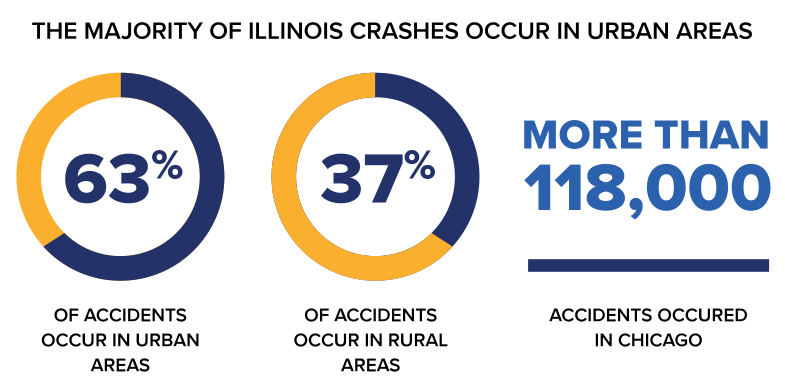
Truck accidents in Illinois are not distributed evenly across the state. According to data from the Illinois Department of Transportation (IDOT), the majority of truck-involved crashes occur in urban areas, with a particular concentration in and around Chicago. The 2022 Crash Facts published by IDOT highlight that urban locations consistently experience a greater number of crashes than rural areas, reflecting the higher volume of traffic, complex intersections, and dense population centers that characterize cities like Chicago. Therefore, you are most likely to be involved in a truck accident in Chicago.
Major expressways and highways in the Chicago metropolitan area such as I-90 (Kennedy Expressway), I-94 (Dan Ryan Expressway), and I-294 (Tri-State Tollway)—are frequent sites of truck accidents. These corridors handle significant commercial freight traffic daily, and congestion or construction zones can dramatically increase the risk of collisions involving large trucks.
Statewide, IDOT’s 2023 State Freight Plan Draft reports that Illinois sees an average of 13,400 truck-involved crashes each year, with a third of these occurring on the state’s busiest freight routes. These high-crash corridors are often found at major intersections, interchanges, or stretches of highway where freight and commuter traffic merge.
National data from the Federal Motor Carrier Safety Administration (FMCSA) further supports these findings, showing that fatal truck crashes are more likely to occur on interstate and U.S. highways, roads that see high volumes of both commercial and passenger vehicles.
In summary, truck accidents in Illinois are most likely to happen in densely populated urban areas, particularly around Chicago and its network of major expressways and highways. These areas experience high traffic volumes and complex road conditions, increasing the likelihood of truck-involved collisions. If you frequently travel on these routes, extra caution is essential, especially during peak hours or in adverse weather conditions.
Truck accidents are most frequent in population centers like Chicago
En esta página
Common Causes of Truck Accidents in Chicago
Each year, thousands of crashes involving large commercial vehicles like tractor-trailers, delivery trucks, and semi-trucks occur on Illinois roadways. According to the Illinois Department of Transportation (IDOT) 2023 Crash Facts, there were 12,283 crashes involving tractor-trailers in Illinois, contributing significantly to both property damage and severe injuries statewide. Understanding the most common causes of these accidents is essential for prevention and for protecting the rights of those impacted.
Driver-Related Factors
The Federal Motor Carrier Safety Administration (FMCSA) and IDOT both underscore that driver behavior and decision-making are primary contributors to truck accidents. Based on FMCSA’s crash statistics for Illinois, several driver-related causes are consistently cited:
- Exceso de velocidad: Velocidad excesiva remains one of the top causes of accidentes de camión. Large trucks require longer distances to slow down or stop, and speeding reduces a driver’s ability to react to sudden changes in traffic. According to IDOT’s 2023 data, speed-related factors contributed to thousands of crashes involving large trucks, particularly on interstates and major highways that run through and around Chicago.
- Conducción distraída: The use of mobile devices, in-cab technology, or even distractions like adjusting radios can lead to fatal lapses in attention. FMCSA’s analysis shows that distracted driving is responsible for a significant percentage of truck accidents, as even a brief distraction can result in a catastrophic collision due to the size and momentum of commercial vehicles.
- Fatiga del conductor: Truck drivers often work long hours and may violate federal hours-of-service regulations. Fatigue impairs judgment, slows reaction times, and can cause drivers to fall asleep at the wheel. Both FMCSA and IDOT data highlight driver fatigue as a persistent risk factor for serious truck crashes in Illinois.
- Deterioro: Operating under the influence of alcohol, illegal drugs, or prescription medications is another critical factor that our abogados de accidentes de camiones have observed as a cause of many injury-causing crashes. FMCSA’s reports confirm that while professional drivers are held to strict substance testing, impairment-related crashes do occur and can result in severe injuries or fatalities.
Vehicle-Related Causes
Mechanical issues and equipment failures are also frequently cited in crash reports. Trucks are complex machines, and component failures can have devastating consequences:
- Brake Failures: According to FMCSA’s national and state-level data, brake problems are among the most frequently recorded vehicle factors in truck crashes. A fully loaded truck traveling at highway speed requires a much longer distance to stop than a passenger car, and faulty brakes can turn an avoidable situation into a serious collision.
- Tire Blowouts and Wheel Failures: Poorly maintained or overloaded trucks are at particular risk for tire blowouts. These failures can cause drivers to lose control and can lead to multi-vehicle pileups, especially on Chicago’s congested expressways.
- Lighting and Visibility Issues: Trucks must be visible at all times, especially during night driving or in poor weather. IDOT’s 2023 report notes that improperly maintained lights and reflectors continue to contribute to rear-end and side-impact collisions.
Roadway and Environmental Conditions
While driver and vehicle factors are critical, roadway and environmental conditions also play a substantial role in truck crashes across Illinois:
- Weather Hazards: Rain, snow, fog, and ice are common causes of loss-of-control accidents, particularly during Chicago winters. IDOT data confirm that adverse weather increases both the likelihood and severity of truck crashes. Reduced visibility and slippery surfaces make it challenging for even the most attentive drivers to maintain control of large vehicles.
- Construction Zones: Illinois’ highways, especially around Chicago, are often under construction. Changing traffic patterns, narrowed lanes, and abrupt stops make these zones hazardous for trucks, which have larger blind spots and slower stopping capabilities.
- Congested Urban Traffic: Trucks traveling through densely populated urban areas like downtown Chicago face challenging conditions, including frequent stop-and-go traffic, aggressive driving by other motorists, and tight turns. These factors increase the risk of side-impact, rear-end, and underride collisions.
Improper Cargo Loading
How cargo is loaded, distributed, and secured inside a truck can directly impact the risk of an accident. Both FMCSA and IDOT have documented that:
- Overloaded Trucks: Trucks carrying loads that exceed legal weight limits are harder to control and stop.
- Unbalanced or Unsecured Loads: Cargo that shifts during transit can cause a truck to tip over or jackknife. This is especially dangerous during sudden stops or swerves.
Regulatory Compliance Issues
A recurring theme that is seen by our top-rated truck accident lawyers is non-compliance with safety regulations. This includes failures in pre-trip vehicle inspections, neglecting to maintain mandatory logbooks, and disregarding required rest periods. FMCSA and IDOT enforcement data has shown that when trucking companies or drivers fail to comply with safety standards, the risk of catastrophic big-rig accidents rises dramatically.
Interactions with Other Vehicles
Truck accidents in Illinois often involve multiple vehicles. IDOT’s report shows that the majority of fatal and injury-causing truck crashes involve cars or motorcycles, with cars frequently being at fault due to unsafe lane changes, abrupt stops, or following too closely. However, because trucks have large blind spots and require more space to maneuver, the margin for error is much smaller.
High-Risk Locations
Certain corridors in Illinois—such as I-55, I-57, I-80, I-90, and I-294—are particularly dangerous for truck accidents due to heavy freight traffic, high speeds, and frequent merging. According to IDOT, intersections, on-ramps, and areas near distribution hubs on the outskirts of Chicago see a disproportionate number of truck-related crashes.
Our truck accident lawyers can handle any motor vehicle accident case.
Chicago Abogados de accidentes de bicicleta
Chicago Abogados de accidentes de navegación
Chicago Abogados de lesiones cerebrales
Chicago Accidentes de tráfico en el trabajo Abogados
Chicago CTA Abogado de accidentes de autobús y tren
Chicago Abogados de accidentes por conducción distraída
Chicago Abogados de accidentes por conducir ebrio
Chicago Abogados de accidentes de conductores de edad avanzada
Chicago Abogados de accidentes de coche mortales
Chicago Lyft Abogado de Accidente de Coche
Chicago Abogados de Accidentes de Motocicleta
Chicago Abogado Accidente Autobús Pace
Chicago Abogados de accidentes de coches de alquiler
Chicago Abogado de accidentes de tráfico
Our Top Rated Truck Accident Lawyers

Desde el momento en que me puse en contacto con este bufete me trataron como de la familia. Recomiendo encarecidamente a estos abogados.
- RG




En esta página
Injuries Caused by Truck Accidents in Chicago
Collisions involving large commercial trucks are among the most devastating crashes that can occur on Chicago and Illinois roadways. The size and weight of these vehicles mean that even seemingly minor incidents can lead to catastrophic or life-altering injuries for those involved. Victims of truck accidents often face a long and difficult road to recovery, with challenges that go well beyond the immediate physical harm. Understanding the types of injuries commonly sustained in truck accidents and their impact on victims’ lives is essential for anyone seeking compensation and justice after a crash.
Traumatic Brain Injuries (TBI)
One of the most serious and common consequences of truck accidents is a traumatic brain injury. The force of a collision with a semi-truck or large commercial vehicle can cause severe head trauma, even if airbags deploy or the victim was wearing a seatbelt.
TBIs can range from mild concussions to severe, permanent brain damage. Symptoms may include headaches, memory loss, confusion, mood changes, difficulty concentrating, or loss of consciousness. Severe brain injuries can leave a person unable to work, care for themselves, or enjoy life as they did before the crash. Often, long-term rehabilitation and therapy are required, and some victims may need lifelong care.
Spinal Cord Injuries and Paralysis
The impact of a truck accident can also cause serious damage to the spinal cord. These injuries are particularly devastating because they can result in partial or full paralysis. Depending on the location and severity of the injury, victims may lose function and sensation in their limbs (paraplegia or quadriplegia), or experience chronic pain and muscle weakness.
Spinal injuries often require immediate surgery followed by months or years of intensive rehabilitation. Victims may need adaptive devices, home modifications, or assistance with daily living activities, dramatically changing the course of their lives and the lives of their families.
Broken Bones and Fractures
Broken bones are a frequent outcome in truck accidents. The force of impact can easily shatter bones in the arms, legs, ribs, pelvis, or facial structure. Some fractures are simple and heal within weeks, but others are complex, requiring surgical intervention, metal hardware, and extended physical therapy.
Compound fractures—where the bone pierces the skin—pose additional risks of infection and complications. Multiple broken bones can leave victims bedridden for extended periods, unable to work or care for their families.
Lesiones internas
Truck accidents often cause internal injuries that are not immediately obvious but can be life-threatening if not treated quickly. These can include punctured lungs, internal bleeding, organ damage (such as to the liver, kidneys, or spleen), and ruptured blood vessels.
Internal injuries may require emergency surgery and often result in lengthy hospital stays. In some cases, damage to internal organs leads to permanent health problems that require ongoing medical attention and affect the victim’s quality of life.
Whiplash and Neck Injuries
Whiplash is a common injury in collisions, including those involving commercial trucks. Even at low speeds, the rapid back-and-forth movement of the head and neck can stretch and tear muscles, ligaments, and tendons. Neck injuries can also include herniated discs and nerve damage, leading to chronic pain, headaches, dizziness, and reduced mobility.
While some victims recover from whiplash in a matter of weeks, others may experience long-term or recurrent symptoms that interfere with daily life and work.
Cuts, Lacerations, and Soft Tissue Injuries
The power of a truck crash can shatter glass, crush vehicle frames, and hurl debris, resulting in deep cuts, lacerations, and bruises. Some wounds may cause significant blood loss or lead to permanent scarring and disfigurement.
Soft tissue injuries, such as sprains, strains, and contusions, may seem minor but can be extremely painful and slow to heal. In many cases, these injuries require physical therapy and ongoing pain management.
Emotional and Psychological Injuries
Physical injuries are only part of the story. Survivors of truck accidents often experience significant emotional and psychological trauma. Post-traumatic stress disorder (PTSD), anxiety, depression, and nightmares are common after a serious crash.
These invisible injuries can be just as debilitating as physical wounds, interfering with daily life, relationships, and employment. Psychological injuries may require counseling, medication, or long-term mental health care to manage.
The Lasting Impact of Truck Accident Injuries
The injuries sustained in a truck accident can change a victim’s life in an instant. Medical bills, rehabilitation costs, lost wages, and the need for ongoing care can add financial strain to an already difficult situation. In many cases, victims are unable to return to their previous work or activities, and families may have to adjust to a new reality.
If you or a loved one has been injured in a truck accident in Chicago or anywhere in Illinois, it’s essential to seek medical attention immediately and consult with a knowledgeable attorney. You may be entitled to compensation for your medical expenses, lost income, pain and suffering, and other damages resulting from your injuries. Holding negligent parties accountable is not just about recovery—it’s about justice and protecting your future.
Immediately After a Truck Accident in Chicago
If you are involved in a big-rig accident, there are several crucial things you should do:




En esta página
How to Deal With Insurance Companies After a Truck Accident in Chicago
If you have been involved in a truck accident in Chicago or anywhere else in Illinois, you may be wondering whether you should talk to compañías de seguros. Saber qué información compartir y qué no revelar tanto a su propia compañía de seguros como a la aseguradora de la otra parte puede marcar la diferencia a la hora de tener éxito en una reclamación.
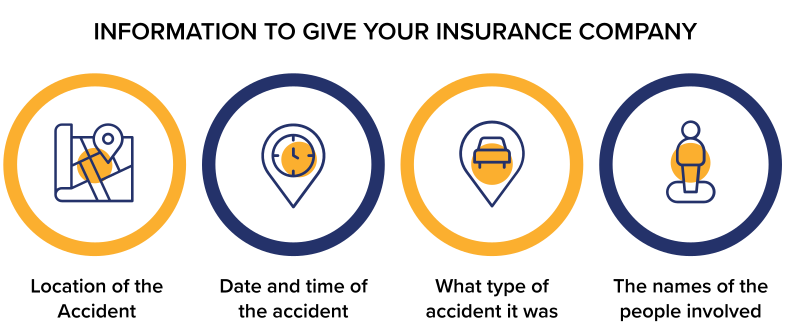
The best practice is to notify your insurance company about your truck accident as soon as possible. Cooperate with your insurer but do so very carefully and keep your comments to a minimum. If you are asked to provide a statement, be sure to divulge only absolutely necessary information. Do not go into details about your injuries, and avoid admitting or discussing fault. Stick to the following facts:
- Lugar del accidente
- Fecha y hora del accidente
- el tipo de accidente (por ejemplo, una colisión por alcance)
- Los nombres de las personas implicadas
Negociar con la compañía de seguros
Dealing with insurance companies after a truck accident can be an extremely complicated process that involves skillful negotiation. At Briskman Briskman & Greenberg, we know exactly how to handle insurers. We make sure that you can focus on getting better while our knowledgeable truck accident lawyers conduct investigations and gather valuable evidence to help you obtain the compensation you deserve.
Recursos adicionales
No comparta más información de la necesaria
Compartir información adicional con su compañía de seguros puede debilitar su caso de indemnización. Para evitar cometer errores y garantizar que tu caso está en buenas manos, consult a Chicago truck accident lawyer antes de hablar con cualquier compañía de seguros.
Recuerde, las compañías de seguros son empresas con ánimo de lucro
If you have been involved in a truck accident, it is important to remember that the insurance company is not on your side. Most insurers are seeking to pay injured victims as little as possible. Even your own insurance company may try to downplay the severity of your accident and injuries in an attempt to pay a smaller settlement amount.
Sea educado y cuidadoso al hablar con la compañía de seguros de la otra parte.
If the other party’s insurance company contacts you, be courteous but do not provide a recorded statement. Tell the insurer that they should speak with your insurance company or your top-rated personal injury lawyer for details.
Determining who is at fault for a truck accident is the first step in recovering damages.
Truck accidents often occur due to someone’s negligence, whether it is speeding, distracted driving, driving under the influence or other irresponsible behaviors behind the wheel.
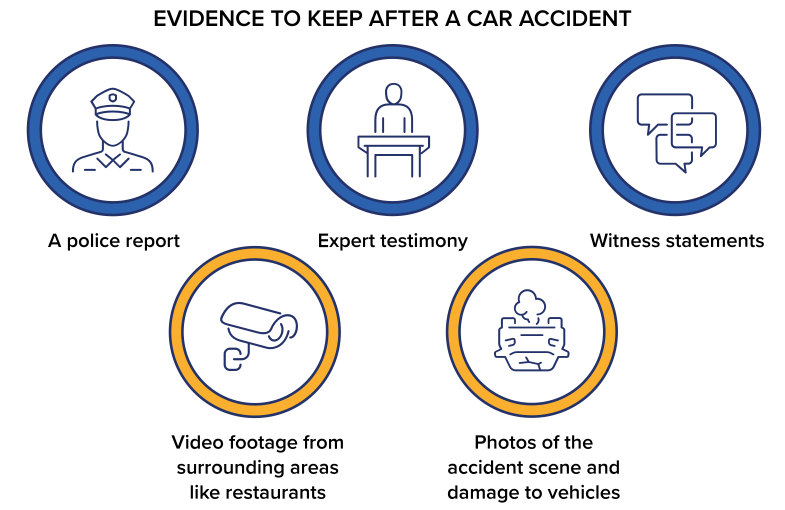
After a truck accident, make sure to exchange contact details and insurance information with the other driver. Remember, avoid admitting fault at the scene because your statement can be used against you in the future. If there is a disagreement between parties, several key pieces of evidence can help support your claim and determine fault in the car crash, including the following:
- Informe policial
- Testimonio de expertos
- Declaración de testigos
- Imágenes de vídeo de las zonas circundantes, como restaurantes, calles locales y carreteras
- Fotos del lugar del accidente, daños físicos en los vehículos, estado de la carretera, etc.
Guides for Truck Accident and Personal Injury Victims
Nuestros reportajes web tratan en profundidad temas concretos de lesiones personales.



En esta página
Laws in Illinois that Affect Truck Accident Victims
1. Fault-Based Insurance System
Illinois follows a traditional fault-based system for car and truck accidents, meaning the driver who caused the accident is legally responsible for covering the damages. Victims can pursue compensation by filing a claim with the at-fault driver’s insurance company, filing a claim with their own insurer (in some cases), or filing a personal injury lawsuit in civil court. This system gives accident victims the right to recover damages such as medical bills, lost wages, and pain and suffering directly from the party responsible.
-
En at-fault driver (or their insurer) is financially responsible for damages.
-
Injured parties can file a claim with the at-fault driver's insurer, their own insurer (if they have applicable coverage), or presentar una demanda por daños personales.
Relevant Statute: 625 ILCS 5/7-203 (proof of financial responsibility)
2. Prescripción
In Illinois, truck accident victims have a limited time to take legal action. For personal injury claims, the statute of limitations is two years from the date of the crash, while property damage claims (like vehicle repairs) must be filed within five years. Failing to file within these deadlines typically means the court will dismiss the case, making it crucial for injured parties to act promptly.
-
Daños corporales: You have 2 years from the date of the accident to file a lawsuit.
-
Daños materiales: You have 5 years to sue for vehicle or property damage.
Relevant Statute: 735 ILCS 5/13-202 (injury); 735 ILCS 5/13-205 (property)
3. Comparative Fault Rule
Illinois uses a modified comparative fault rule when determining compensation in a truck accident lawsuit. If a victim is partially at fault for the accident, they can still recover damages, as long as they are less than 50% responsible. However, their compensation will be reduced by their percentage of fault. For example, a person found 20% at fault would receive only 80% of the total awarded damages.
-
If the injured party is less than 50% at fault, they can recover damages.
-
Recovery is reduced by the percentage of fault.
Example: If you’re 20% at fault, your damages are reduced by 20%.
Relevant Statute: 735 ILCS 5/2-1116
4. Mandatory Police Reporting
Under Illinois law, drivers must report any accident involving injury, death, or property damage exceeding $1,500 (or $500 if any driver is uninsured) to law enforcement. Failure to report an accident can result in fines and potential license suspension. A police report can also serve as critical evidence in an insurance claim or injury lawsuit, making timely reporting especially important.
-
You must report an accident to police if:
-
Hay injury, death, or over $1,500 in property damage (or $500 if uninsured).
-
-
Failure to report may result in license suspension.
Relevant Statute: 625 ILCS 5/11-406
5. Minimum Auto Insurance Requirements
All Illinois drivers are required to carry minimum liability insurance to legally operate a vehicle. The minimum limits are $25,000 for bodily injury per person, $50,000 per accident for bodily injury, and $20,000 for property damage. Drivers must also carry uninsured motorist coverage at the same minimum levels, offering protection if they are injured by a driver who lacks insurance.
Drivers in Illinois must carry at least:
-
$25,000 per person for bodily injury
-
$50,000 per accident for bodily injury
-
$20,000 for property damage
-
Cobertura de motorista sin seguro is required at the same minimums.
Some Trucks Have Different Insurance Requirements in Illinois
In Illinois, state law mandates that all truck drivers carry liability insurance. The specific amount of coverage they need depends on how the driver and/or trucking company operates, as well as the type of cargo being transported and whether their routes go beyond state lines.
For truck drivers operating solely within Illinois, the minimum required insurance coverage varies by the type of freight:
- Household goods: At least $300,000 in liability coverage
- General freight: A minimum of $750,000
- Oil transport: At least $1,000,000
- Hazardous materials: A minimum of $5,000,000
If the deliveries extend outside Illinois, different insurance minimums may apply. In most situations, federal regulations—specifically the Federal Motor Carrier Safety Regulations (FMCSR)—require truck drivers who cross state borders to have at least $750,000 in liability coverage.
Relevant Statute: 625 ILCS 5/7-601
6. DUI Laws and Civil Liability
Driving under the influence (DUI) is a serious offense in Illinois that carries both criminal penalties and civil consequences. If a driver causes a crash involving a truck while impaired by alcohol or drugs, they can be held liable for the victim’s damages in a personal injury lawsuit. A DUI conviction can serve as strong evidence of negligence, and in severe cases, punitive damages may also be awarded to the injured party.
-
DUI drivers face both criminal penalties and civil liability.
-
A DUI conviction can be powerful evidence of negligence in a civil case.
-
Daños punitivos may be awarded in extreme cases.
Relevant Statute: 625 ILCS 5/11-501
7. Dram Shop Liability
Illinois law allows injured parties to hold bars, restaurants, and other alcohol-serving establishments financially accountable if they serve alcohol to someone who is visibly intoxicated and that person later causes a car or truck accident. Known as “dram shop” liability, this legal doctrine can apply even if the injured person was not involved in the alcohol consumption, creating an additional path to compensation in DUI-related crashes.
-
Injured parties may sue an establishment that sold alcohol to a visibly intoxicated person who caused a crash.
Relevant Statute: 235 ILCS 5/6-21
8. Right of Way and Traffic Control Laws
Violations of Illinois traffic laws—such as running red lights, failing to yield, or not stopping for pedestrians—can help establish legal fault in a car accident. These violations may be considered “negligence per se,” meaning the behavior is automatically deemed negligent if it led to a truck accident. Understanding and proving such violations is essential for building a strong injury claim.
-
Violating traffic rules (e.g., red light running, failure to yield) can establish negligence per se.
-
Useful in proving fault in intersection or pedestrian cases.
Relevant Statutes:
9. Medical Payments Coverage (MedPay)
Medical payments coverage, also known as MedPay, is an optional form of insurance in Illinois that helps pay for immediate medical costs following a truck crash in Chicago or anywhere in Illinois, regardless of who was at fault. While not required by law, MedPay can cover hospital visits, ambulance fees, and even funeral expenses, providing financial relief while liability is being determined or litigation is pending.
-
Not required in Illinois but often part of optional coverage.
-
Pays for immediate medical expenses regardless of fault.
10. Access to Crash Reports
Crash reports are vital documents that contain key details about a car or truck accident, including officer observations, witness statements, and preliminary fault assessments. In Illinois, accident victims can obtain crash reports through the Illinois State Police or local law enforcement agencies. These reports often serve as important evidence in insurance claims or personal injury lawsuits.
-
Victims can request accident reports through the Illinois State Police or local departments.
-
Useful for claims and litigation.
Relevant Portal: Illinois State Police Crash Reports
Frequently Asked Questions Answered by Briskman Briskman & Greenberg Personal Injury & Car Accident Lawyers, Chicago Truck Accident Lawyers





VISTO EN: